Enter product details (such as color, size, materials etc.) and other specific requirements to receive an accurate quote.
leave a message
If you are interested in our products and want to know more details,please leave a message here,we will reply you as soon as we can.
submit
other
Home

Blog

Blog

  • Optimize Filter Production with Advanced Filter Element Pleating Machine
    Optimize Filter Production with Advanced Filter Element Pleating Machine
    May 21, 2026
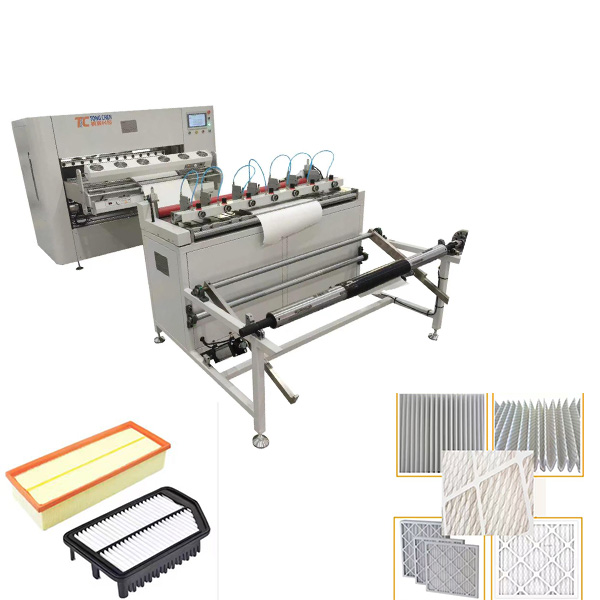
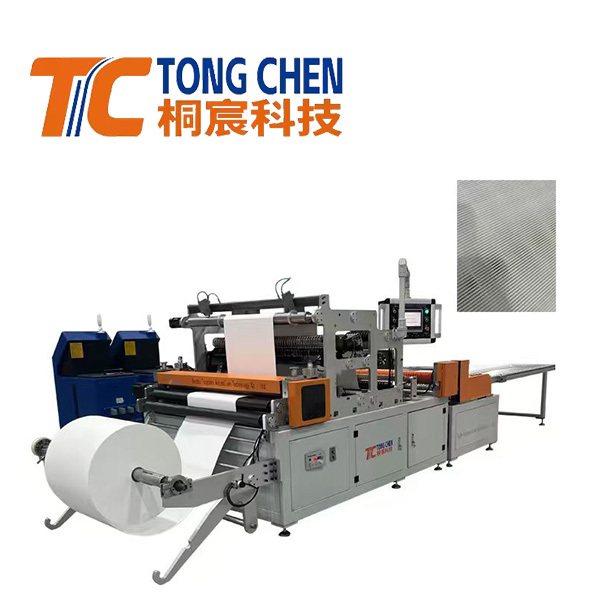
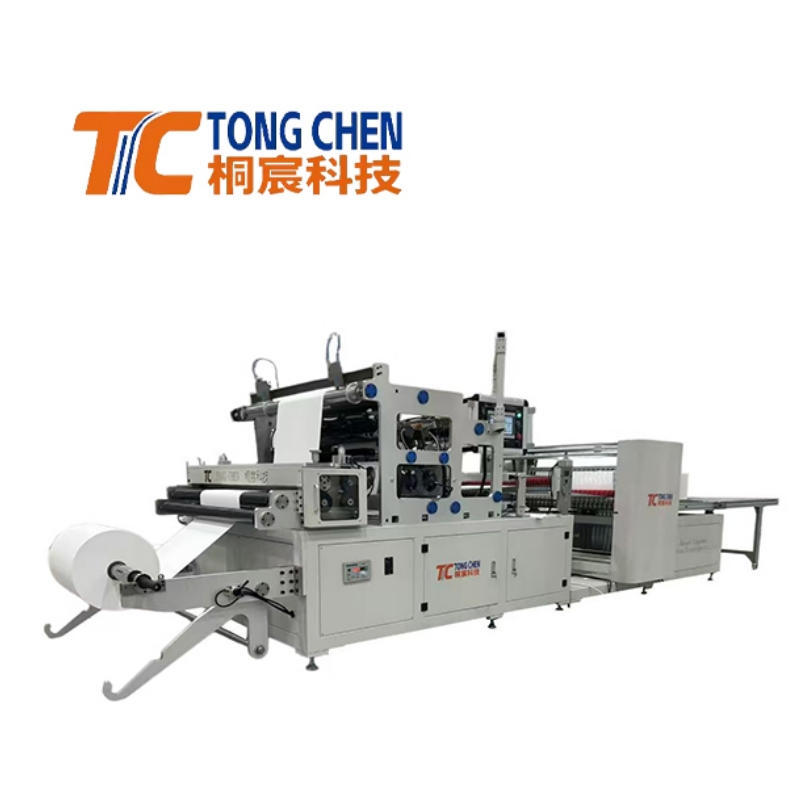
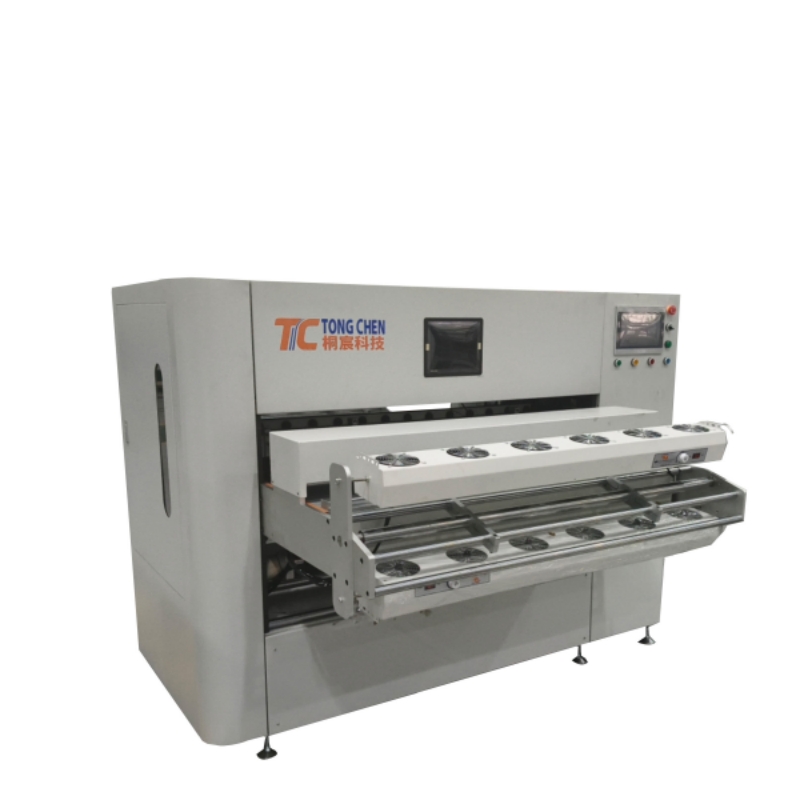
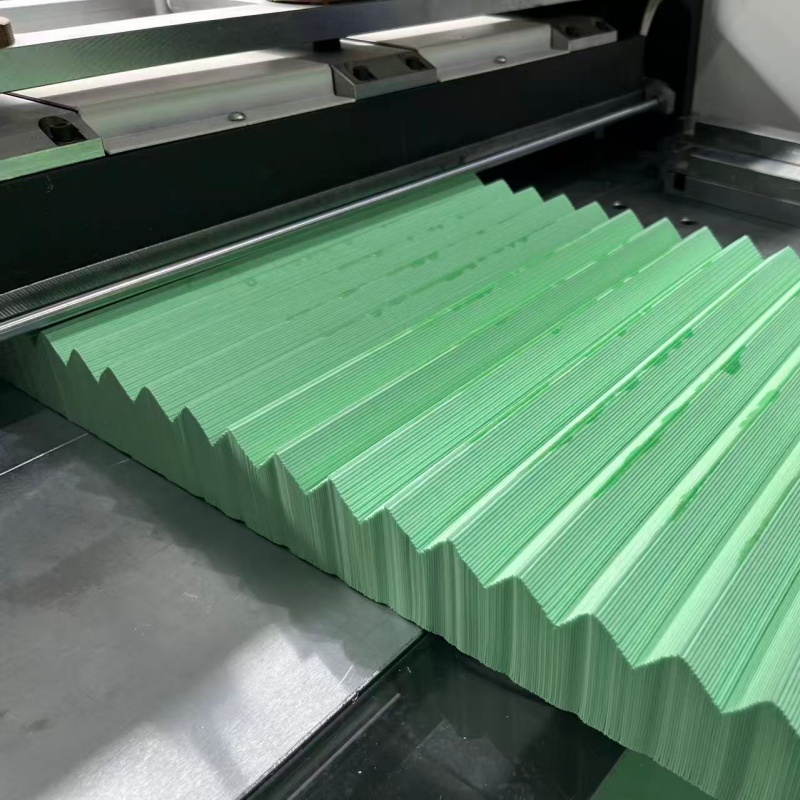
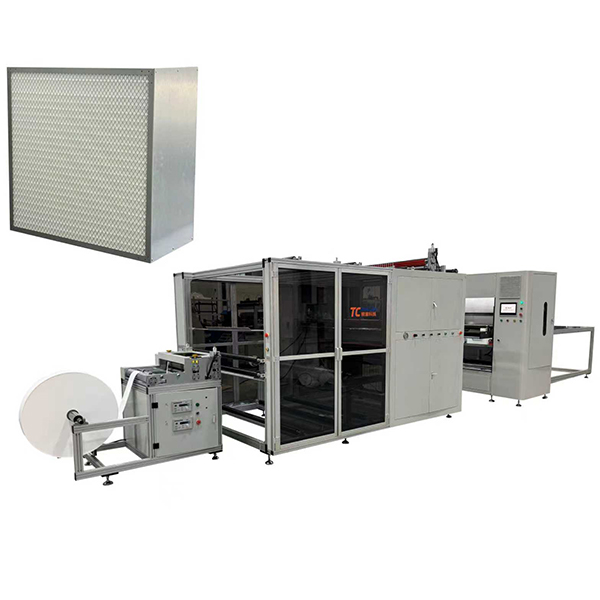
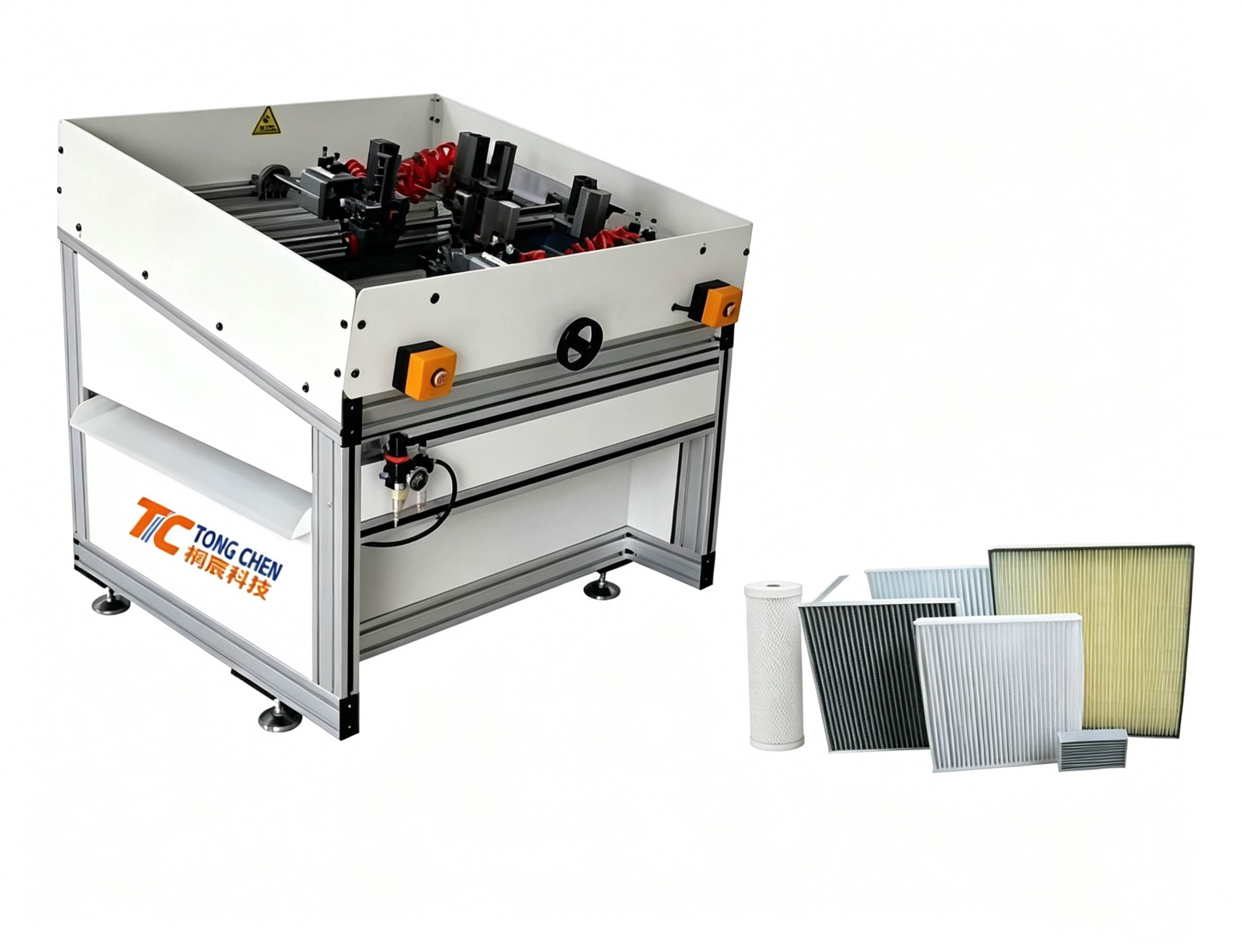
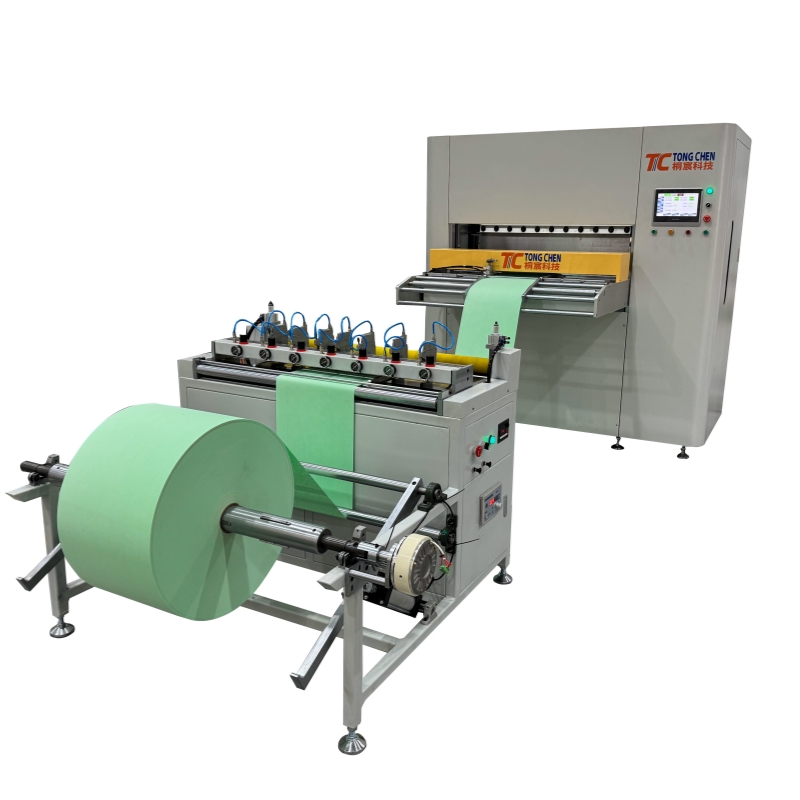
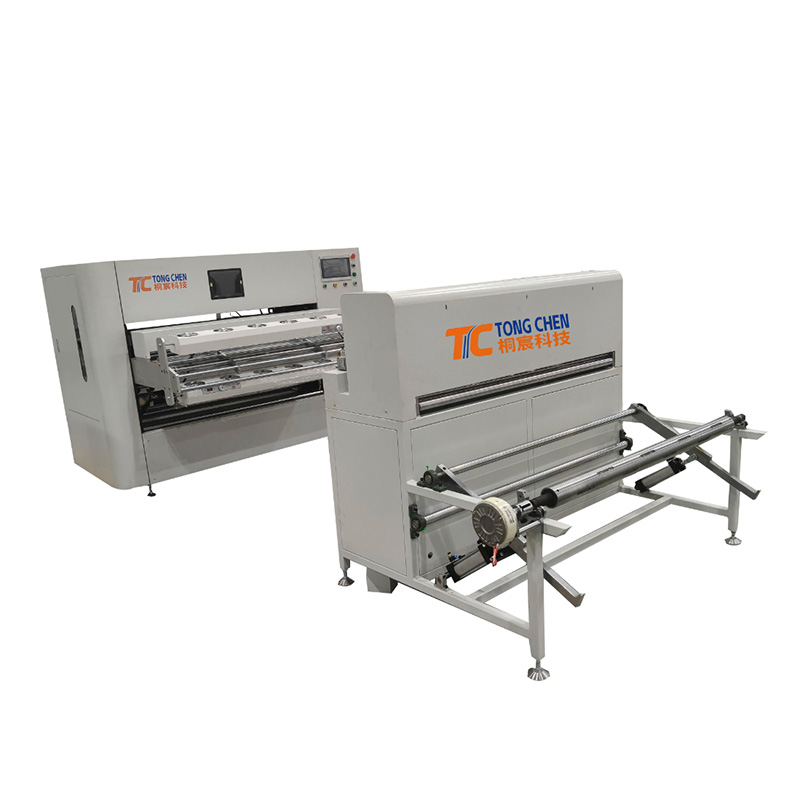
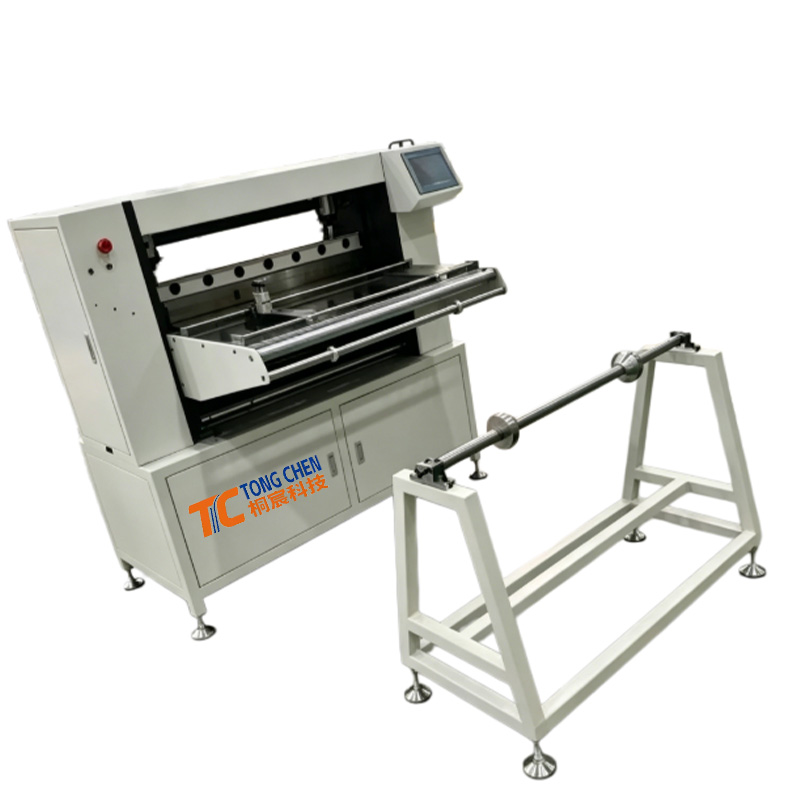
      In the modern filter manufacturing industry, a high-performance filter element pleating machine has become core equipment to boost production efficiency and product quality. More and more filter factories choose professional pleating machinery to complete filter paper folding and forming work efficiently. automatic filter pleating equipment Whatever you needs, TONGCHEN is at your side. For automotive filter production, the car filter element folding machine is widely favored. It is specially designed to process various automobile filter cores, matching the production demands of vehicle air filters and oil filters perfectly. When it comes to liquid filter making, the oil filter paper pleating machine stands out. It features stable operation and neat paper folding effect, greatly improving the sealing and filtering performance of finished oil filters. To meet large-scale ventilation system production needs, the air filter element pleating machine is the ideal choice. It can quickly finish pleating of large-area air filter materials, suitable for commercial and industrial air purification filter production. Enterprises pursuing higher production capacity will prefer the high speed filter pleating machine. Its fast working speed and stable running state effectively shorten production cycles and cut down labor costs for filter manufacturers. If you need versatile production equipment for diversified filter products, the automatic filter pleating equipment is your best pick. It supports automatic feeding, folding and shaping, realizing full-process unmanned production. Besides common household and vehicle filters, the industrial filter pleating machine is applied in chemical, mechanical and environmental protection industries. It can process thick filter materials to make high-strength industrial filter elements, meeting strict industrial filtration standards.   Conclusion All these pleating machines are designed to simplify filter production procedures. Choosing suitable filter processing machinery can not only upgrade product quality, but also help filter manufacturers gain stronger market competitiveness.
    Read More
  • Pocket Filter Making Machine: Premium Solution for G4-F9 Medium-efficiency Filter Bag Production
    Pocket Filter Making Machine: Premium Solution for G4-F9 Medium-efficiency Filter Bag Production
    May 20, 2026
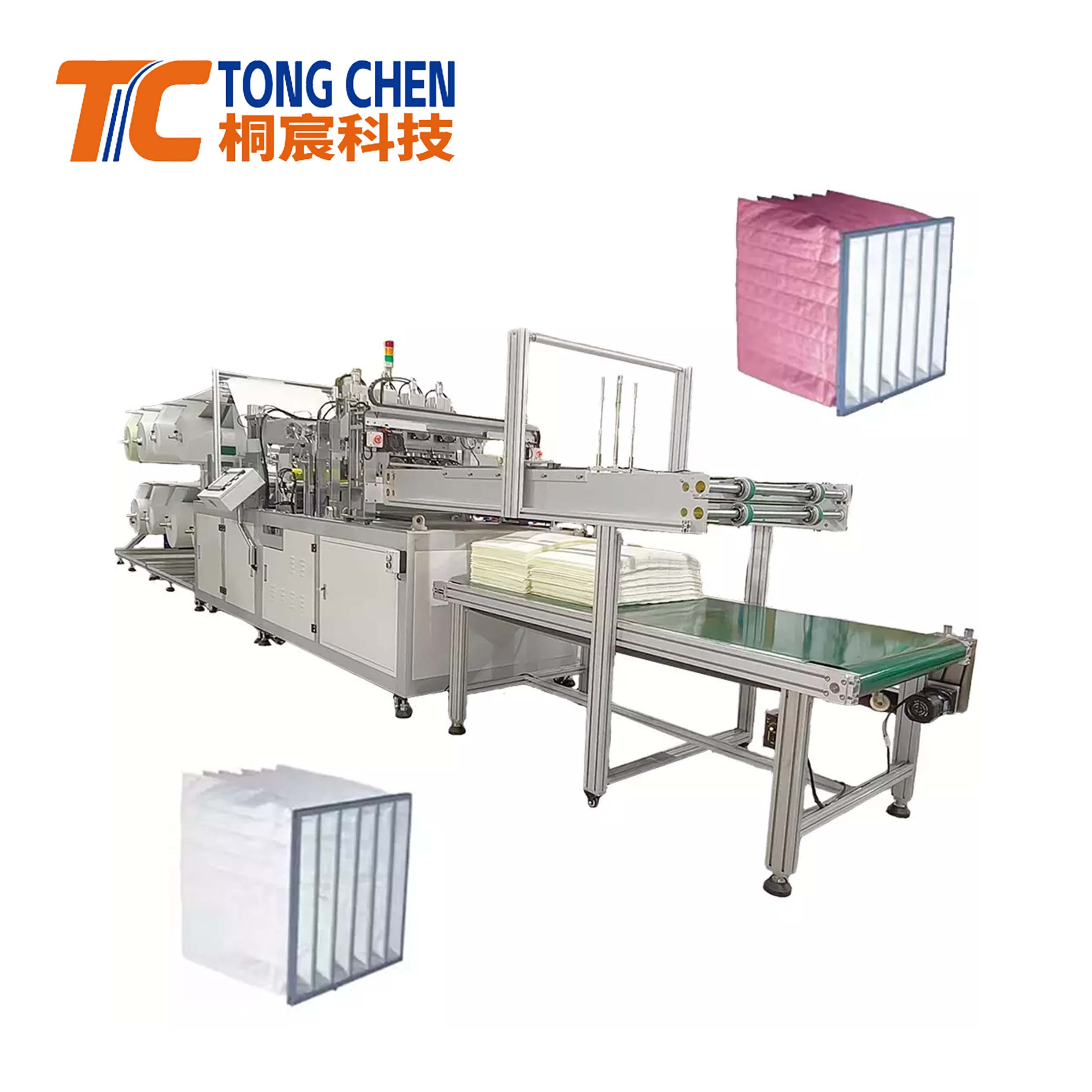
      Introduction In the HVAC and air filtration industry, medium-efficiency pocket filters are indispensable for industrial ventilation, air conditioning systems, clean rooms, and dust purification projects. The demand for high-precision, durable, and cost-effective filter bags continues to soar, which puts forward higher requirements for filter bag production equipment. Our Pocket Filter Making Machine is professionally developed to manufacture medium-efficiency air filter bags, integrating ultrasonic welding technology and automated processing systems to deliver stable, efficient, and high-quality filter bag production solutions for filter manufacturers.   Core Design & Working Principle This pocket filter making machine adopts mature ultrasonic welding technology, which is the core advantage distinguishing it from traditional gluing and stitching processes. Without using adhesives, the equipment realizes seamless and firm bonding of filter materials through high-frequency ultrasonic vibration. The whole production process is fully automated, covering raw material unwinding, feeding, welding, cutting, and finished product rewinding or sheet discharging. The machine has strong material compatibility and can process multiple common filter raw materials, including non-woven fabric, melt blown fabric, dual-component materials, and hot-air cotton. It perfectly supports the production of filter bags ranging from G4 to F9 efficiency grades, covering all mainstream medium-efficiency filtration products in the market, meeting diverse filtration needs of different industrial scenarios.   Key Technical Parameters & Performance Advantages Reasonable mechanical configuration and precise parameter design make this equipment stand out among similar filter bag making machines. The detailed technical specifications and competitive strengths are summarized as follows: 1. Flexible Production Size Range To adapt to customized production demands of different filter bags, the machine is equipped with a flexible size adjustment system. Its maximum bag width reaches 750mm. In terms of length, it supports two production modes: the single-output mode achieves a maximum bag length of 3600mm, while the dual-output mode hits 1800mm. Whether it is short and compact filter bags for small ventilation equipment or ultra-long filter bags for large industrial air ducts, the machine can complete processing efficiently. 2. Efficient Production Capacity Production efficiency is a key factor affecting factory output benefits. This equipment has two production modes to meet different processing requirements. The rewinding speed can reach 22 meters per minute; for sheet finished products, the processing capacity is up to 30 pieces per minute. The actual output can be adjusted flexibly according to filter bag size and material thickness, balancing production speed and product quality to avoid material waste. 3. Advanced Ultrasonic Welding Technology Compared with traditional bonding processes, ultrasonic welding brings unparalleled advantages. The welding seam is smooth, firm and not easy to crack, effectively preventing air leakage and dust leakage of filter bags. Meanwhile, the welding process is environmentally friendly with no glue residue, no chemical pollution, which conforms to the environmental protection production standards of the filtration industry and ensures the cleanliness of air filter products. 4. Optimized Material Loading & Unwinding System The machine is designed with a large-capacity material winding structure. The maximum winding diameter and unwinding diameter both reach 1000mm (1m). The large-diameter material roll design reduces the frequency of raw material replacement, shortens production interruption time, and greatly improves continuous production efficiency, which is very suitable for mass industrial production. 5. High-precision Servo Motor Configuration Equipped with 4 high-performance servo motors, including 2 absolute servo motors, the equipment realizes precise control of feeding, cutting and positioning. The servo drive system ensures stable material transmission, accurate cutting size, and low operation failure rate. It effectively avoids defective products caused by position deviation, reduces manual intervention, and lowers the later maintenance cost.   Product Application Scenarios The medium-efficiency filter bags produced by this machine are widely used in multiple industries, with stable filtration performance and strong practicability: ∗ HVAC Air Conditioning System: Commercial buildings, shopping malls, office buildings and central air conditioning ventilation systems to intercept medium-sized dust particles. ∗ Industrial Purification: Factories in electronics, pharmaceuticals, food and chemical industries to assist workshop air purification. ∗ Clean-room Ventilation: Intermediate filtration link of clean rooms to protect high-efficiency filters and extend their service life. ∗ Environmental Dust Removal: Industrial dust collection and waste gas pre-treatment systems to reduce air pollutant emissions.   Why Choose This Pocket Filter Making Machine? • Wide Compatibility: Supports various filter materials and covers G4-F9 efficiency grades, meeting diversified production needs. • Stable & Durable: Servo motor drive + ultrasonic welding technology, low failure rate and long service life. • High Production Efficiency: Dual production modes + large-diameter material rolls, realizing uninterrupted mass production. • Low Operating Cost: Fully automatic operation reduces labor costs; no glue consumption cuts raw material expenses. • Premium Finished Product: Tight welding seam, uniform size and good air permeability, improving the market competitiveness of filter bags.   Conclusion With the continuous upgrading of global air purification standards, medium-efficiency pocket filters will maintain a strong market demand. This pocket filter making machine perfectly integrates automation, high efficiency and precision, solving the pain points of low efficiency, unstable quality and high cost in traditional filter bag production. It is an ideal processing equipment for filter manufacturers to expand production scale and optimize product quality. Whether you are a small and medium-sized filter processing factory or a large industrial production enterprise, this equipment can bring stable production capacity and considerable economic benefits. If you are looking for a reliable medium-efficiency filter bag production machine, this ultrasonic pocket filter making machine will be your cost-effective choice.
    Read More
  • Why Fiberglass Filter Production Requires Professional Automated Production Lines
    Why Fiberglass Filter Production Requires Professional Automated Production Lines
    May 13, 2026
      “ "Our 300mm High-Temperature Fiberglass Folding Production Line turns precision for heat-resistant media into real-world results: less material waste, stable high output, and greater production efficiency for your filter manufacturing. This isn’t just a machine—it’s a strategic asset built to scale your quality, meet strict HEPA/ULPA standards, and secure your growth in high-end industrial and automotive filtration markets." Nina Peng - Operations Manager   In high‑efficiency filtration, industrial high‑temperature purification, automotive painting, semiconductor cleanrooms, and pharmaceutical fields, fiberglass filters — especially high‑temperature resistant models — are irreplaceable core components. Their material properties, structural precision, and performance stability cannot be guaranteed by manual operation or simple machinery. Only professional automated production lines can meet the strict requirements of mass production. 1. Fiberglass Filter Media Is Too Special for Ordinary Equipment Unlike PP, non‑woven, or paper filter materials, fiberglass has unique characteristics: Brittle, fragile, easy to fray and produce powder High rigidity, poor resilience, sensitive to folding force Requires uniform pleats, consistent spacing, and flat forming Manual or simple equipment often causes: Uneven pleats, distorted angles Material breakage, high scrap rates Unstable filtration area and excessive air resistance Professional automated lines protect fiberglass throughout the entire process — feeding, tension control, pre‑slitting, marking, pleating, and conveying — ensuring zero damage and stable forming. 2. Precision Determines Performance: Simple Machines Cannot Make HEPA-Grade Filters Filtration efficiency, dust-holding capacity, air resistance, and service life all depend on pleating precision. Professional automated lines provide three critical advantages: Full servo control: Precise adjustment of pleat height, speed, and pressure with minimal error Dual servo knife pleating: Ideal for brittle fiberglass, forming straight, firm pleats Integrated slitting & pleating: One‑step processing to eliminate secondary damage and deviation In contrast, products from basic machines: Fail to meet HEPA/ULPA standards Show unstable performance between batches Cannot pass leakage or high-temperature reliability tests 3. High-Temperature Fiberglass Filters Require Specialized Production Lines High-temperature fiberglass filters are widely used in: Automotive paint booths (200°C+) New energy battery baking Semiconductor & pharmaceutical cleanrooms Industrial boilers, kilns, waste incineration These applications demand: Heat-resistant fiberglass media High-temperature adhesive and support lines Stable pleating under high-temperature conditions Ordinary machines often cause: Pleat deformation Layer separation Sealing failure Poor performance in high-temperature environments Only specialized high-temperature automated lines ensure qualified output. 4. Mass Production & Consistency Win Global High-End Markets For automotive, semiconductor, new energy, pharmaceutical, and export orders, consistency is mandatory: Uniform pleat depth & spacing Stable air resistance & efficiency Pass leakage and strength testing Traceable process parameters Automated lines deliver: 24-hour stable running High output, low labor cost Batch-to-batch consistency Easy access to international certifications & high-end markets Our Recommended Solution Tongchen 300mm High-Temperature Non-Partition Fiberglass Folding Production Line Designed specifically for high-temperature resistant fiberglass HEPA/ULPA filters, this line solves all critical production pain points. Key Features Pleat height: 20–300mm adjustable Max working width: 1000mm Pleating speed: 0–60 folds/min, stepless adjustable Dual servo knife system for precise, non-damaging pleating Automatic synchronous control for top/bottom lines and filter paper Aluminum press plate specially designed for fiberglass High-temperature resistant structure for heat-resistant media Stable, durable, low failure rate, easy operation Main Applications Automotive painting line high-temperature filtration Semiconductor & electronics cleanrooms New energy battery manufacturing Pharmaceutical aseptic & high-temperature sterilization areas Industrial kilns, boilers, waste incineration flue gas treatment Conclusion Fiberglass filters — especially high-temperature resistant models — are high-performance components that demand precision manufacturing. For stable quality, high output, low scrap rates, and access to global high-end markets, a professional automated production line is not an option — it is a necessity. Tongchen’s 300mm High-Temperature Non-Partition Fiberglass Folding Line gives you the technology to produce premium high-temperature fiberglass filters efficiently and reliably.
    Read More
  • Air Filter Element Pleating Machine: Ultimate Guide to Filter Media Pleating Solutions
    Air Filter Element Pleating Machine: Ultimate Guide to Filter Media Pleating Solutions
    May 12, 2026
    Air Filter Element Pleating Machine: Ultimate Guide to Filter Media Pleating Solutions Published: May 12, 2026   Introduction In the competitive filtration manufacturing industry, the air filter element pleating machine has become indispensable equipment for producing high-performance air filters, automotive filters, HVAC filters, and HEPA filter products. Filter pleating technology directly determines filter surface area, airflow efficiency, dust holding capacity, and overall product durability. For filter manufacturers seeking stable output, uniform pleat formation, and cost-effective production, choosing a professional pleating machine brand is critical. Among global top manufacturers, TONGCHEN stands out as a trusted supplier of full-series filter pleating equipment, delivering reliable, fully automatic, and high-precision pleating solutions for worldwide clients.   What Is an Air Filter Element Pleating Machine? An air filter paper pleating machine is specialized industrial equipment designed to fold raw filter media such as filter paper, synthetic non-woven fabric, fiberglass media into standardized zig-zag pleats. This process maximizes the filtration area without increasing the overall filter size, ensuring better air purification performance and longer service life. Modern pleating equipment integrates automatic material feeding, servo pleat forming, tension control, fixed-length cutting, and intelligent HMI operation. It is widely applied in automotive, industrial ventilation, household air purification, HVAC systems, and cleanroom filtration industries.   Key Types of Pleating Machines From TONGCHEN To meet diverse manufacturing demands, TONGCHEN provides a complete range of pleating machines covering multiple application scenarios, matching all Google high-search keywords: Automotive filter element pleater Specially optimized for car air filters, cabin air filters, and engine intake filters. It supports multiple filter paper thicknesses and adjustable pleat height, ideal for mass production of auto filter elements. HEPA filter pleating equipment Designed for high-efficiency HEPA and ULPA filter media. It achieves ultra-fine, uniform pleats with high density, meeting strict cleanroom, medical, and air purifier filter production standards. Industrial filter folding machine Suitable for large industrial air filters, dust collector filters, and heavy-duty filter elements. TONGCHEN industrial folding equipment features sturdy structure, stable running speed, and long continuous working life. Cabin air filter pleating machine Professional model dedicated to automotive cabin air filters, with fast mold change, low material loss, and consistent pleat spacing, helping manufacturers improve product qualification rate. Full automatic filter pleating machine TONGCHEN fully automatic pleating machines realize one-click parameter setting, automatic deviation correction, and unmanned continuous production, greatly saving labor costs and improving production efficiency.   Core Advantages of TONGCHEN Pleating Machines High Precision Pleat Consistency: Adopts servo drive system and CNC control, ensuring even pleat spacing, height and folding angle for every filter element. Wide Media Compatibility: Works with filter paper, synthetic fiber, activated carbon media, fiberglass and composite filter materials. Intelligent Operation: Equipped with touchscreen HMI, easy parameter adjustment, fault self-diagnosis and production data statistics. Durable & Low Maintenance: Heavy-duty mechanical structure and imported core components reduce failure rate and extend service life. Customized Support: TONGCHEN can customize pleat size, working width, production speed and production line layout according to customer factory requirements.   Why Choose TONGCHEN As Your Pleating Machine Partner With years of focus on filtration machinery R&D and manufacturing, TONGCHEN is not only a supplier of air filter element pleating machine, but also a one-stop solution provider for filter production lines. We provide machine installation, technical training, after-sales maintenance, and production process optimization services for global customers. Whether you are a small filter factory starting production or a large manufacturer upgrading automated production lines, TONGCHEN can provide cost-effective, high-stability pleating equipment to boost your product competitiveness in the global market.   Conclusion As the demand for air purification and industrial filtration continues to grow, investing in a high-quality air filter element pleating machine is the key to improving product quality and production efficiency. If you are looking for reliable air filter paper pleating machine, HEPA filter pleating equipment, or automotive filter element pleater, TONGCHEN is your most trustworthy long-term partner.
    Read More
  • 4 Key Upgrades That Transform HEPA Filter Manufacturing
    4 Key Upgrades That Transform HEPA Filter Manufacturing
    May 07, 2026
      HEPA filters are critical for capturing microscopic contaminants, and their performance hinges entirely on the quality of the pleating process. Today, we’re thrilled to announce the new upgrade of our Full Auto Mini HEPA Filter Pleating Production Line – a game-changer designed to address industry pain points and elevate your manufacturing capabilities with four key enhancements. Let’s dive into the upgrades that make this line a must-have for modern HEPA filter manufacturers: 1. Dual Roller System: Unmatched Flatness for Consistent Pleats The foundation of a high-quality HEPA filter is perfectly flat filter media – any warping or unevenness can disrupt pleat uniformity, reduce filtration area, and compromise overall performance. Our new dual roller system eliminates this issue by applying consistent, balanced pressure across the entire width of the filter media. This upgrade translates to pleats that are uniform in depth and spacing, maximizing the filter’s dust-holding capacity and airflow efficiency – critical factors for meeting the strict standards of HEPA filtration. Whether you’re working with glass fiber, polypropylene, or other specialized filter media, the dual roller system delivers consistent flatness, reducing material waste and ensuring every filter meets your quality benchmarks. 2. Vertical Glue Application: Perfect Glue Lines, Every Time Glue application is a make-or-break step in pleating – uneven glue lines, overflow, or gaps can lead to pleat separation, filter failure, and costly rework. Our upgraded vertical glue application system revolutionizes this process, delivering precise, uniform glue lines that bond pleats securely without excess or mess. By applying glue vertically, we ensure even distribution along the entire height of each pleat, creating a strong, consistent bond that withstands the rigors of filter assembly and long-term use. Perfect glue lines that enhance filter durability and reliability, all while streamlining the production process. 3. 2.3m Extended Conveyor Belt: Boost Efficiency and Product Integrity Productivity and product integrity go hand in hand – and our 2.3m extended conveyor belt delivers both. The longer conveyor provides more space for the pleated media to cool and set after gluing, ensuring the glue fully adheres before the filter moves to the next production stage. This reduces the risk of pleat shifting or glue smearing, which are common with shorter conveyor belts that rush the cooling process. Beyond improving product quality, the extended conveyor also boosts workflow efficiency by allowing for a smoother, more continuous production process. It accommodates higher production speeds without compromising precision, making it easier to scale your output while maintaining consistent quality. 4. 100mm Higher Frame: Easier Feeding, Less Downtime Operator convenience and workflow efficiency are often overlooked, but they directly impact productivity and employee satisfaction. Our 100mm higher frame addresses the common pain point of cumbersome feeding, making it easier for operators to load filter media rolls and adjust materials without bending or straining. The elevated frame simplifies the feeding process, reducing the time spent on setup and adjustments, and minimizing the risk of media misalignment – a common cause of downtime and material waste. This upgrade not only improves operator comfort but also streamlines the entire production workflow, reducing bottlenecks and ensuring a more consistent, efficient operation. Whether you’re running small batches or large-scale production, the higher frame makes daily operations smoother and more efficient.   Versatile, Precise, and Built for Stability Beyond these four key upgrades, our Full Auto Mini HEPA Filter Pleating Production Line offers exceptional versatility to meet your unique manufacturing needs. With an adjustable pleating height range of 10-120mm, it accommodates a wide variety of HEPA filter sizes and specifications – from small mini-pleat filters for air purifiers to larger filters for industrial cleanrooms. Designed for stability and precision, the line integrates advanced automation and intelligent control, reducing human error and ensuring consistent performance across long production runs. Whether you’re a small manufacturer or a large-scale operation, this machine delivers the reliability you need to meet growing market demands. It handles various filter media types with ease, from glass fiber to synthetic composites, and its robust construction ensures long-term durability with minimal maintenance requirements.
    Read More
  • Everything About Modular Filter Paper Pleating & Gluing Production Lines
    Everything About Modular Filter Paper Pleating & Gluing Production Lines
    Apr 29, 2026
      "In filter production, ROI and reliability define success. Our HEPA Mini Filter Pleating Machine turns precision for high-temperature media into real-world results: less waste, more output, and greater profits for your clients. This isn’t just a machine—it’s a strategic asset built to scale your quality and secure your growth." Nina Peng - Operations Manager   What Is a Modular Filter Paper Pleating & Gluing Line? A modular filter production line is a set of independent but fully synchronized machines designed for filter paper forming. Our system includes three professional units: Pre‑slitting & paper feeding unit   Servo air filter pleating equipment   Automatic hot‑melt gluing machine   This structure ensures high stability, easy maintenance, and strong flexibility for industrial and automotive filter manufacturing.   Core Technical Knowledge You Need to Know 1. Why Servo Control Is Important for Pleating? Servo motors provide closed‑loop precision control for pleating blades. ✔ Stable pleat height and spacing ✔ High speed up to 280 folds/min ✔ Wide adjustment range: 5–70mm ✔ Less wear, longer service life 2. Why Heat Setting Is Necessary? Heat setting eliminates internal stress of filter paper after folding. ✔ Temperature range: room temperature ~ 260°C ✔ Prevents pleat rebound and deformation ✔ Improves glue adhesion and stability ✔ Ensures filters keep shape in high‑temperature environments 3. Why Synchronized Control Matters? All three units run at matched speed via PLC and infrared monitoring. ✔ No paper stretching or wrinkling ✔ Accurate alignment between pleating and gluing ✔ Higher product consistency ✔ Lower defect rate 4. Advantages of Modular Design   ✔ Easier maintenance and repair ✔ Flexible upgrade for new products ✔ Stable performance for each process ✔ Lower risk of full‑line shutdown ✔ Longer lifespan for core components   Frequently Asked Questions (FAQ) Q1: What materials can this line process? It supports: ● Filter paper ● Fiberglass media ● Non‑woven fabric ● Composite filter materials Q2: What filters can you produce? ● Automotive air, oil, fuel filters ● Industrial filters for compressors & generators ● HVAC and air purification filters ● Various industrial filter elements Q3: What is the processing range? ● Feeding width: 25–850mm ● Pleat height: 5–70mm ● Feeding speed: 0.5–25m/min Q4: How does the gluing system ensure precision? ● 52 independently controlled nozzles ● Supports continuous, intermittent, single/double‑sided, staggered gluing ● Real‑time synchronization with pleating ● Glue dots accurately on pleat peaks/valleys Q5: What are the key benefits for factories? ● High stability & low defect rate ● Labor saving & high efficiency ● Easy operation via touch screen ● Fast production changeover ● Long service life & low maintenance cost Q6: Is this line suitable for small‑batch and mass production? Yes. It supports fast parameter adjustment and is ideal for both customized small batches and large‑scale mass production.   Conclusion Our Fully Automatic Servo Blade Folding & Gluing Production Line uses servo control, synchronous drive, heat setting and independent gluing systems to provide a stable, efficient, and long‑lasting solution for filter manufacturers. If you are looking for a reliable filter forming production line, this modular system is your optimal choice.
    Read More
  • High-Precision Hot Melt Glue Machine-- the Core Driver of Efficient Filter Production
    High-Precision Hot Melt Glue Machine-- the Core Driver of Efficient Filter Production
    Apr 24, 2026
    For filter manufacturers, the biggest challenges in the gluing process often lie in three aspects: × Unstable gluing effect leading to product scrap, × Frequent glue addition affecting production continuity, × Cumbersome operation increasing labor costs. This high-performance and versatile hot melt glue machine is tailored for filter paper processing, and its advanced configuration and user-friendly design perfectly address these industry pain points, bringing a comprehensive upgrade to the filter gluing process.   70L Large-Capacity Glue Storage Tank: Uninterrupted Production Guarantee Continuous operation is the key to improving production efficiency in mass manufacturing. This hot melt glue machine is equipped with a 70L large-capacity glue storage tank, which can store a large amount of hot melt glue at one time to support long-term continuous operation. It avoids the problem of uneven gluing caused by temperature fluctuations when adding glue, laying a solid foundation for stable production efficiency and product quality.   Dual Sets of 50-Point Independent Glue Components: Precision Gluing Without Interference The core requirement of filter gluing is "precision". This hot melt glue machine is configured with two sets of 50-point independent glue components, and each component is equipped with a separate control solenoid valve, forming a fully independent gluing control system. For filters with complex structures and multiple gluing positions, this design can fully meet the diverse gluing needs, ensure the uniformity and consistency of each gluing point, and effectively reduce the product scrap rate caused by inaccurate gluing.   Standard 25.4mm Glue Line Spacing: Aligning with Industrial Standards The glue line spacing of this hot melt glue machine is fixed at 25.4mm, which is designed to meet the standard gluing requirements of most industrial filter products. For filter manufacturers, adhering to industrial standards can not only improve product quality but also enhance market competitiveness. The fixed standard glue line spacing of this machine eliminates the need for frequent adjustment of spacing parameters, simplifies the operation process, and ensures that each batch of products has consistent gluing quality, which is especially suitable for large-scale standardized production.   Intelligent Screen Control: Simple Operation, Precise Adjustment This hot melt glue machine adopts a humanized control design, and the glue gun is equipped with an intelligent screen control switch. This intelligent control design simplifies the operation process, reduces the learning cost of operators, and even new employees can quickly master the operation skills. At the same time, the precise adjustment of glue volume can avoid glue waste caused by excessive glue application and poor bonding effect caused by insufficient glue application, achieving the dual goals of cost saving and quality improvement. Compared with traditional manual control glue machines, this intelligent design greatly improves the convenience and accuracy of operation, and reduces the error caused by human operation.   Multiple Flexible Spraying Functions: Adapting to Diverse Gluing Scenarios Different types of filters and different processing links have different requirements for gluing methods. A single gluing mode can no longer meet the diverse production needs. This hot melt glue machine is equipped with a variety of flexible spraying functions, covering continuous glue spraying, single-side gluing, double-side gluing, surface broken glue, staggered gluing, and gluing according to the number of folds. This versatility not only reduces the need for multiple equipment for different gluing processes but also improves the flexibility of the production line, allowing manufacturers to quickly switch production processes according to product types and meet the diverse market demands. This high-precision and efficient hot melt glue machine for filter production, with its large-capacity glue storage tank, independent precision glue components, standard glue line spacing, intelligent control system, and diverse spraying functions, perfectly solves the pain points of traditional filter gluing, and achieves the integration of stability, precision, and efficiency. For any filter manufacturer pursuing high quality and high efficiency, this hot melt glue machine is undoubtedly an indispensable core production equipment, which will inject new power into the high-quality development of the filter industry.
    Read More
  • Advanced Filtration Manufacturing Systems: High-Temperature Production & Precision Pleating Technologies
    Advanced Filtration Manufacturing Systems: High-Temperature Production & Precision Pleating Technologies
    Apr 24, 2026
    Meta Description: Explore cutting-edge filter production solutions - industrial high-temperature lines, CNC pleaters with laser positioning, and anti-static glass fiber processing. Learn how OEM manufacturers optimize efficiency.   1. Industrial-Grade High-Temperature Filter Production Lines Continuous Operation for Extreme Environments Key Innovations: ✔ Multi-zone temperature control (50-550°C gradient heating) compliant with ISO 16890 ePM1 standards Case Study: Achieved 99.97% filtration efficiency @ 0.3μm in 24/7 cement plant dust collection Smart monitoring: Integrated PLC+SCADA systems for real-time differential pressure/temperature tracking Modular design processes glass fiber/PTFE/P84 composite materials simultaneously   2. Custom Pleating Systems for HEPA/ULPA Standards Precision Engineering for Critical Applications Model Pleats/m Max Speed Material Thickness Standard 80-120 8m/min 0.3-1.2mm Premium CNC 120-200 15m/min 0.2-2.0mm   3. Anti-Static Solutions for Glass Fiber Processing Preventing Hazardous Discharge in Sensitive Environments Three-Stage Charge Control: ● Pre-treatment: Carbon fiber lamination (surface resistance <10⁶Ω) ● Processing: Ionized air bars for real-time neutralization ● Post-treatment: Nano tin-oxide coating (ASTM D257 certified) Failure Analysis: Non-treated equipment showed dielectric breakdown at 3kV vs. >15kV post-upgrade   4. OEM Advantages: China's Manufacturing Expertise Factory-Direct Technology & Supply Chain Benefits Competitive Edge: ✔ Yangtze Delta specialty steel industrial cluster access ✔ 72-hour rapid prototyping delivery ✔ Certifications: CE/PED/ASME with in-house wind tunnel testing (EN1822 compliant)   5. The Future: Digital Twins & Predictive Maintenance Client Achievements: 92% accuracy in blade wear prediction via IoT sensors 18% energy reduction through digital twin simulations Selection Guide: ▶ High-temp needs → Choose alloys with thermal expansion <3×10⁻⁶/°C ▶ Precision focus → Prioritize repeatability over maximum speed Call to Action: Ready to upgrade your production? [Download Our Technical Checklist] covering 12 critical machine parameters. Or [Schedule a Virtual Tour] to see live demonstrations of ISO Class 5 compatible systems.
    Read More
  • How to Choose the Right Pleating Machine for HEPA/ULPA Filters
    How to Choose the Right Pleating Machine for HEPA/ULPA Filters
    Apr 13, 2026
      “ "In filter production, ROI and reliability define success. Our HEPA Mini Filter Pleating Machine turns precision for high-temperature media into real-world results: less waste, more output, and greater profits for your clients. This isn’t just a machine—it’s a strategic asset built to scale your quality and secure your growth." Nina Peng - Operations Manager   HEPA / ULPA Pleating Machine Selection Guide HEPA and ULPA filters are critical for cleanrooms, medical equipment, and high-precision industrial environments—requiring extremely high pleating precision, uniform spacing, and stable performance. Choosing the wrong pleating machine can lead to filter efficiency failure, product waste, and lost customers. For filter manufacturers specializing in HEPA/ULPA filters, the key is to select a machine that can meet strict technical requirements while ensuring production efficiency. Here’s a guide to choosing the right HEPA pleating machine, plus how Tongchen’s solutions and stand out from the competition. 3 Key Factors to Consider 1. Pleat Precision HEPA filters require pleat height and spacing to be consistent within ±0.1mm. Any deviation will reduce filtration efficiency. The machine must feature a high-precision control system to ensure uniformity. 2. Material Compatibility HEPA/ULPA filters often use high-temperature resistant glass fiber or PP filter media, which are more fragile than ordinary materials. The machine must handle these materials gently to avoid damage. 3. Automation Level Mass-producing HEPA filters requires high automation to reduce manual error and improve efficiency—look for machines with integrated feeding, pleating, gluing, and cutting functions. How to make the right choice? -To help you make the right choice, we first detail the core knowledge of HEPA/ULPA filter pleating, including the technical requirements of pleating, the characteristics of filter media, and the key points of equipment selection. Mastering this knowedge can help you avoid blind selection and ensure that the selected equipment meets the production needs of high-precision filters. Core Knowledge of HEPA/ULPA Pleating Strict Technical Requirements • HEPA efficiency: ≥ 99.97% (0.3μm) • ULPA efficiency: ≥ 99.999% • Pleat tolerance: ±0.1mm • No skewing or material damage Filter Media Characteristics • Materials: Glass fiber, PP, PTFE • Fine fibers, high efficiency • Low toughness, easy to damage Equipment Selection Key Points • High-precision servo control system • Accurate tension control & soft feeding • Integrated automation processes • Customizable for different specifications Daily Maintenance • Clean pleating knives and glue nozzles regularly • Inspect core components for wear • Calibrate tension control systems • Replace consumable parts in time 🚀 Tongchen HEPA Pleating Machine Production Line Tongchen’s 300mm Pleat Height HEPA Mini Filter Pleating Machine is designed to meet strict HEPA / ULPA production requirements. Ultra-Precision Pleating Control Our HEPA pleating line uses advanced servo control technology and digital interface, allowing pleat height to be adjusted up to 300mm with an accuracy of ±0.05mm —higher than the industry standard of ±0.1mm. This ensures every pleat is uniform, maximizing filtration area and efficiency for HEPA/ULPA filters. Integrated Automated Production Combines pre-slitting, pleating, dual hot-melt gluing, cooling, and conveying. Improves efficiency by up to 50%. Customization Capability Supports mini-pleat and deep-pleat configurations with adjustable rollers and gluing systems for different production needs. 🏆 Why Choose Tongchen? ✔ 10+ years of R&D experience ✔ ISO-certified production ✔ Full after-sales support (installation & training) 📞 Contact Us Ready to upgrade your production line? WhatsApp: +86 17718236977 ninapeng@tchepafiltermachine.cn
    Read More
  • Advanced Pleating Technologies: 5 Key Systems Revolutionizing Air Filter Manufacturing
    Advanced Pleating Technologies: 5 Key Systems Revolutionizing Air Filter Manufacturing
    Apr 13, 2026
      “ "When investing in capital equipment, ROI and long-term reliability are my top priorities. The precision and consistency this line delivers for high-temperature media directly translates into significantly reduced material waste and higher throughput for our clients. This isn't just a machine; it's a strategic asset for scaling high-quality filter production." JullyZhang - Operations Manager   Advanced Pleating Technologies In the rapidly evolving air filtration industry, precision pleating machinery has become the backbone of high-performance filter production. As manufacturers demand greater efficiency and consistency, specialized equipment like Servo Motor Pleating Production Lines and 300mm Pleat Height Systems are setting new standards. This article explores six critical technologies transforming the sector, with insights into their applications and technical advantages. 1. Servo Motor Pleating Production Lines: The Precision Benchmark Modern servo-driven pleating systems eliminate mechanical backlash, achieving ±0.1mm repeatability—critical for HEPA/ULPA filters. These systems integrate:   Closed-loop motion control for synchronized blade and feed operations   Real-time pleat counting with auto-correction algorithms   IoT-enabled predictive maintenance capabilities Pro Tip: Pair with laser-guided web alignment to reduce material waste by up to 15%. 2. 300mm Pleat Height Pleating Systems: Deep-Pleat Dominance Designed for industrial bag filters and energy-efficient HVAC applications, these systems feature:   Reinforced folding blades with tungsten carbide coatings   Programmable pleat stabilization systems to prevent collapse   Automatic height compensation for varying material densities Industry Trend: Rising demand for high-capacity pleat filters in semiconductor cleanrooms is driving innovation in this segment. 3. Multilayer Air Filter Pleating Machines: Composite Material Masters Handling combinations like meltblown-nonwoven or activated carbon layers requires:   Independent tension control for each material layer   In-line lamination systems (hot air/ultrasonic)   Thickness sensors to maintain pleat consistency The primary filter rotary folding machine Whatever you needs, TONGCHEN is at your side. Fully automatic servo blade folding and gluing production line Whatever you needs, TONGCHEN is at your side. Data Point: Multilayer machines now achieve 30m/min speeds while maintaining ≤3% thickness variation. 4. Air Filter Paper Pleating Machines: Specialty Material Experts Optimized for glass fiber and synthetic papers, these systems incorporate:   Humidity-controlled chambers to prevent static buildup   Non-contact web guiding for delicate materials   Gentle guiding for delicate material Emerging Tech: AI-driven defect detection is being integrated to flag micro-tears during high-speed operation. 5. Blade Paper Folding Machines: Versatility Redefined Beyond standard V-pleats, modern blade machines offer:   Quick-change tooling for custom pleat patterns (zigzag, pockets)   Energy-efficient servo-hydraulic hybrid drives   3D simulation software for pre-production validation Case Study: A Tier 1 manufacturer reduced changeover time by 70% using automated blade positioning.   Future Outlook For manufacturers investing in next-gen filtration solutions, prioritizing these five systems ensures competitiveness in markets ranging from automotive to pharmaceutical cleanrooms.
    Read More
  • Innovation in Efficiency! Partitioned Folding Filter Paper Production Line Revolutionizes Filtration Industry
    Innovation in Efficiency! Partitioned Folding Filter Paper Production Line Revolutionizes Filtration Industry
    Apr 03, 2026
    In industries such as chemicals, food, and pharmaceuticals, filter paper is an indispensable material. With growing market demand for high-efficiency and precision filtration, the Partitioned Folding Filter Paper Production Line has emerged as a key driver of technological advancement in the sector. Key Features Partitioned Folding Design: The production line utilizes advanced folding technology, ensuring uniform filter paper distribution and high filtration efficiency while minimizing material waste. Full Automation: From raw material feeding to final packaging, the entire process is automated, significantly improving production efficiency and reducing labor costs. Eco-Friendly & Energy-Saving: Optimized energy consumption design aligns with green manufacturing standards. Applications Chemical Industry: Efficient filtration of corrosive liquids or particulates. Food & Beverage: Ensures liquid clarity and compliance with food safety regulations. Pharmaceuticals: Used for high-purity liquid filtration, guaranteeing drug quality. Industry ImpactThe introduction of the Partitioned Folding Filter Paper Production Line addresses the gap in large-scale production of high-precision filter paper, offering a more reliable and efficient solution for the filtration industry. With further integration of smart technologies, this production line is poised to become an industry standard. ConclusionInnovation knows no bounds. The launch of this production line marks a new era of intelligent and high-efficiency filtration technology. Companies that seize this opportunity will gain a competitive edge in the market!   Partitioned Folding Filter Paper, Production Line, Filtration Technology, Automated Manufacturing, Energy Efficiency
    Read More
  • How a Belt Conveyor Type Drying Oven Solves Efficiency Bottlenecks in Industrial Production
    How a Belt Conveyor Type Drying Oven Solves Efficiency Bottlenecks in Industrial Production
    Mar 28, 2026
    The Core Problem in Modern Drying ProcessesIn many manufacturing industries, especially electronics, adhesives, and industrial components, traditional drying methods often suffer from low efficiency, inconsistent results, and heavy reliance on manual handling. Batch ovens require repeated loading and unloading, causing downtime and uneven heating. This leads to unstable product quality and increased labor costs. The Conveyor Type Drying Oven—also known as a Tunnel Dryer—is designed specifically to eliminate these inefficiencies. By integrating a continuous conveyor system with a controlled heating environment, it ensures seamless processing and consistent drying results.   How the System Works in Real Production ScenariosThe Belt Conveyor Tunnel Oven operates by moving products through a heated chamber via a motor-driven conveyor belt. During this process, the drying or curing cycle—adjustable between 10 to 15 seconds—is completed without interruption. For example, in an electronics factory, after AB adhesive is dispensed onto components, the products are immediately transferred into an Automatic Conveyor Tunnel Furnace. As they move through the oven, the adhesive is rapidly cured, eliminating waiting time and ensuring uniform bonding strength. In another scenario, small industrial parts requiring surface drying after coating can be continuously processed without manual intervention, significantly improving throughput.   Key Features That Drive PerformanceThis Industrial Continuous Drying Oven is designed with productivity and reliability in mind: Continuous belt conveyor system for uninterrupted operation Motor-driven transmission ensures stable and consistent movement Adjustable drying cycle (10–15 seconds) for flexible process control Compact machine size (1100×1000×1500mm) suitable for production lines Stable operating parameters ensuring consistent drying results These features allow manufacturers to maintain high output while ensuring product quality remains uniform.   Comparison with Traditional Drying MethodsCompared to traditional batch ovens, the Continuous Drying Oven offers significant advantages: Efficiency: Continuous processing eliminates downtime between batches Consistency: Uniform heating ensures identical results across all products Labor Savings: Reduced manual handling lowers labor costs Process Integration: Easily integrates into automated production lines Traditional ovens may still be suitable for small-scale production, but for high-volume manufacturing, a Conveyor Type Drying Oven provides a clear competitive edge.   Frequently Asked Questions (Q&A) Q1: What products are suitable for this machine?A: It is ideal for products requiring baking or curing, such as adhesive-bonded components, coated parts, and electronic assemblies. Q2: Can the drying time be adjusted?A: Yes, the cycle can be adjusted between 10–15 seconds depending on process requirements. Q3: Is it suitable for automated production lines?A: Absolutely. The machine is designed for seamless integration into automated conveyor systems.
    Read More
1 2

leave a message

leave a message
If you are interested in our products and want to know more details,please leave a message here,we will reply you as soon as we can.
submit
Contact us:minjuan0526@163.com

Home

Products

WhatsApp

contact